

Kerri Gooding
Published on November 11, 2026
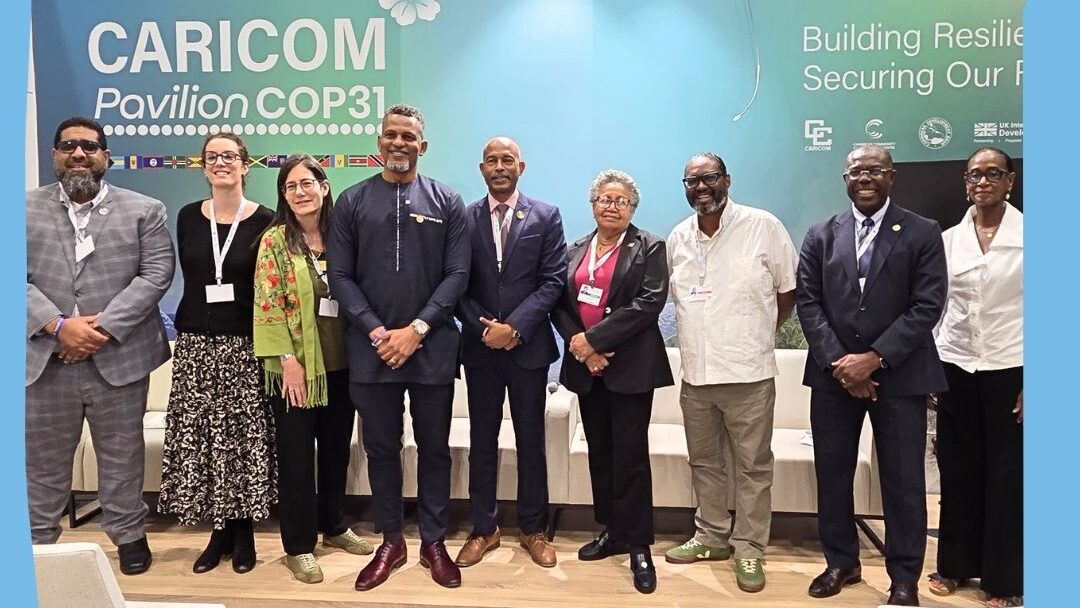
The Caribbean has set ambitious targets for climate action, energy security and sustainable transport. Turning those commitments into tangible progress, however, requires more than investment pledges. It demands bankable projects, financing mechanisms suited to the realities of small island developing states (SIDS), and stronger regional cooperation to move from planning to delivery.
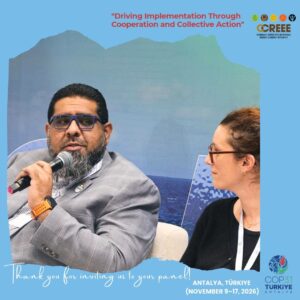
This was the focus of the Caribbean Development Bank (CDB)-led side event, “Financing Caribbean Climate, Energy and Transport Transformation: From Ambition to Implementation”, held on November 10, 2026 at the CARICOM Pavilion during the 31st United Nations Climate Change Conference (COP31) in Antalya, Türkiye. CCREEE Executive Director, Dr. Mohammad Rafik M.S. Nagdee, joined the panel discussion, moderated by Dr. Isaac Solomon, CDB Vice President of Operations.
The discussion examined the persistent barriers slowing the region’s transition, including the high cost of capital, constrained public finances, fragmented markets, limited pipelines of investment-ready projects and insufficient access to financing that reflects the economic and institutional circumstances of Caribbean countries.
Dr. Nagdee called for stronger coordination and strategic collaboration among regional institutions to bridge the gap between investment commitments and tangible implementation, accelerating the delivery of transformative energy projects across the Caribbean.
He emphasised the need to move away from developing projects individually towards a more coordinated, programme-based approach that connects energy data, long-term national planning, project preparation, investment mobilisation and implementation. This would allow countries to build stronger project pipelines, aggregate demand and create opportunities for economies of scale while respecting their different national priorities and stages of development.
 Central to this approach is the complementary role of regional institutions and financing partners. CCREEE’s work in strengthening energy information systems and supporting integrated resource and resilience planning provides an important foundation for identifying national investment priorities and translating them into structured programmes. Through the Caribbean Development Bank’s ASERT programme, this planning work is helping countries establish clearer pathways for energy sector transformation.
These efforts can be further connected to CDB’s Regional Investment Platform, which supports the development of a pipeline of bankable energy projects and the coordination of financing from development partners, climate funds and private investors. Complementing this work, CCREEE is advancing pooled procurement approaches to aggregate demand across countries, improve purchasing power and support more cost-effective deployment of renewable energy, storage and energy-efficient technologies.
Financing arrangements must also respond to the particular challenges facing Caribbean economies. Blended financing, combining grants, concessional loans and guarantees, can help reduce investment risks, lower borrowing costs and create greater opportunities for private sector participation. Mobilising regional financial institutions, including commercial banks and credit unions, will also be important in expanding access to capital for sustainable energy investments.
Beyond financing, the discussion underscored the importance of prioritising investments that deliver lasting economic, social and environmental benefits. Modern and climate-resilient electricity grids, renewable energy, battery storage, energy efficiency and electric mobility all have a role to play in reducing dependence on imported fossil fuels, improving energy security and strengthening the resilience of essential services and infrastructure.
For the Caribbean, the transition represents an opportunity to retain more economic value within the region, reduce exposure to international fuel price volatility and create more affordable and reliable energy systems for households, businesses and communities.
Regional cooperation provides a practical pathway to achieving these outcomes. By aligning institutional expertise, national priorities, investment planning and financing mechanisms, Caribbean countries can strengthen their collective capacity to attract investment and accelerate implementation.
CCREEE extends its sincere appreciation to the Caribbean Development Bank for the invitation and opportunity to contribute to this important dialogue. The Centre also wishes the CDB team continued success with its remaining COP31 side events and engagements.
One Caribbean. Shared ambition. Collective action. From commitments to implementation.


