Thirteen women from ten Caribbean countries are strengthening their knowledge, building professional networks and preparing to contribute to the region’s energy future through the 2026 Women in Renewable Energy (WIRE) Fellowship Programme.
A pillar under the ASERT 2030 Regional Capacity Strengthening Programme (RCSA), WIRE is helping to strengthen women’s participation and leadership in the Caribbean’s energy sector. The programme combines leadership development, technical training, professional coaching and practical learning opportunities to equip Fellows with the confidence, knowledge and networks to advance a more inclusive energy transition.
Three months into the 2026 programme, several important milestones have shaped the Fellows’ journey.
The programme began with a redesigned fellowship experience focused on leadership, professional branding, communication, visibility and technical capacity. It also introduced immersive learning, networking opportunities and a Call-to-Action Initiative designed to encourage Fellows to share their knowledge and engage others in the energy transition.
The Fellows have also commenced specialised technical training with RENAC (Renewables Academy), based in Germany. The training covers renewable energy technologies, project development and energy sector best practices, strengthening the technical foundation needed to contribute to the region’s evolving energy landscape.
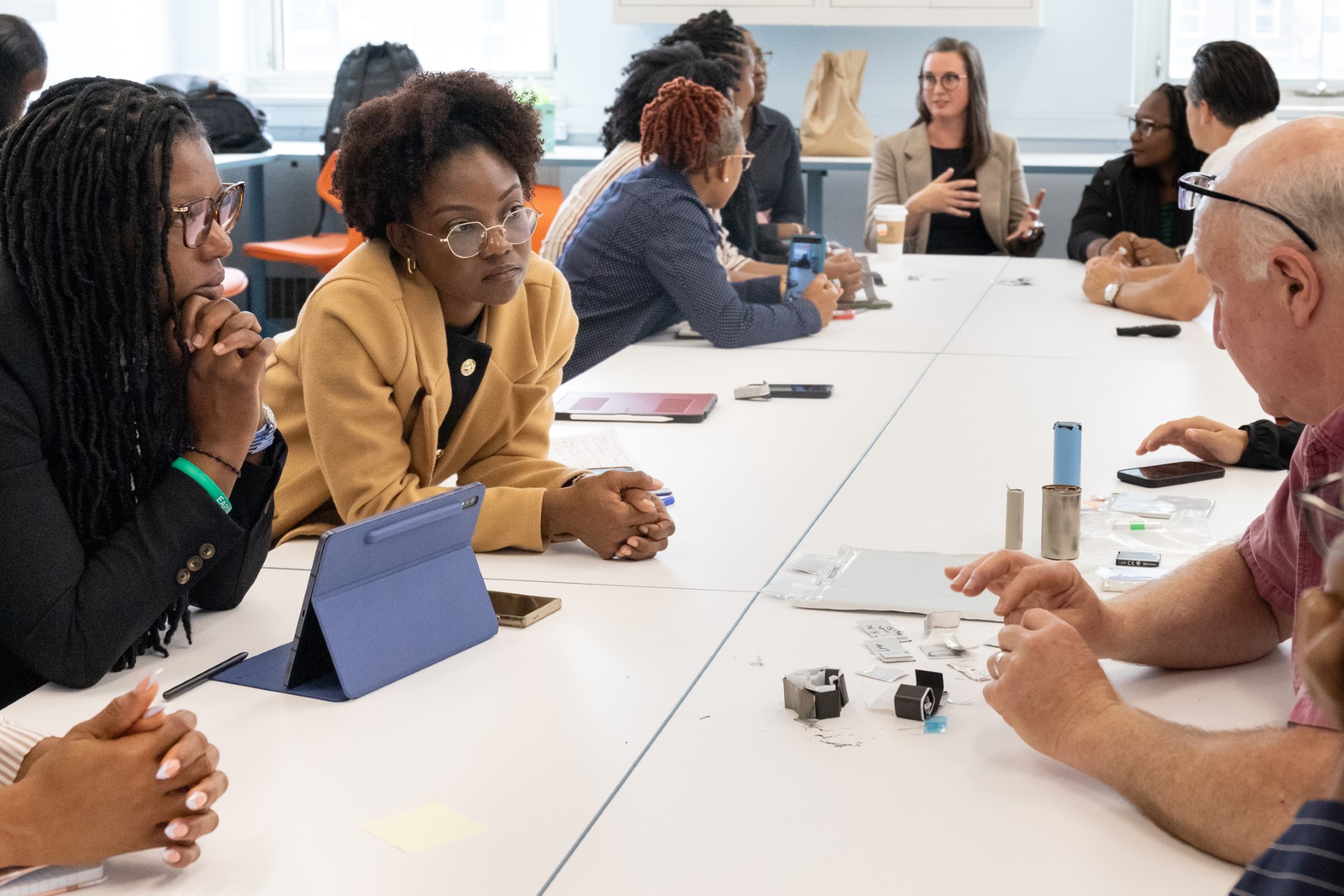
Another major milestone was the WIRE Study Tour to Halifax, Nova Scotia, Canada. The experience connected Fellows with clean energy initiatives, academic institutions, industry leaders and women-led organisations. It provided opportunities for knowledge exchange, professional networking and new perspectives on advancing women’s participation in the energy sector.
For Meshia Clarke, Programme Coordinator, ASERT 2030 RCSA Programme, the most rewarding part of the experience has been seeing the Fellows’ development.
“The greatest highlight of the WIRE Fellowship Programme for me thus far has been witnessing the transformation of our thirteen (13) Fellows, which became especially evident during the Study Tour to Halifax, Nova Scotia Canada. Despite the challenges many of these women have faced, seeing them grow in confidence, leadership potential, and technical expertise has been both inspiring and rewarding.”
Kashieka Broaster, WIRE Lead and Gender Specialist, has also observed how actively the Fellows are shaping their experience and considering their role in the region’s energy transition.
“What I’m noticing most is how much of themselves the fellows bring to shaping this experience. They are helping us to actively craft future cycles through their questions and perspectives, while rethinking what their own contribution to a just energy transition can look like.”
The next phase will place greater emphasis on the Fellows’ Calls to Action, encouraging them to transfer what they have gained through WIRE into their communities and create opportunities for young people, particularly young women and girls, to explore pathways in the energy sector.
The 2026 WIRE Fellowship is supported through financing from the Caribbean Development Bank under ASERT 2030 RCSA, alongside support from Global Affairs Canada, the Foreign, Commonwealth and Development Office (FCDO), the European Union and New Zealand’s Ministry of Foreign Affairs and Trade.
As the programme progresses, its impact will extend beyond the thirteen Fellows. The knowledge, connections and leadership being developed are intended to contribute to a wider network of women helping to shape a more inclusive, resilient and sustainable energy future for the Caribbean.

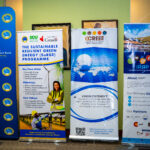

The Caribbean’s energy transition must extend beyond electricity generation. How the region moves people and goods is also central to reducing fossil fuel dependence, lowering greenhouse gas emissions and strengthening energy security.
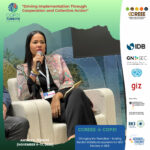
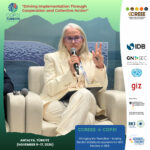
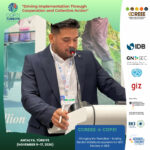
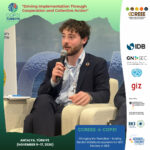
That was the focus of “Charging the Transition: Scaling Electric Mobility Ecosystems for NDC Delivery in SIDS”, a CCREEE-hosted session at the CARICOM Pavilion during COP31 in Antalya, Türkiye, on November 10, 2026.
The discussion brought together regional and international perspectives on what it will take to scale electric mobility across Small Island Developing States. Moderated by Vekash Khan, Technical Chief of Staff at CCREEE, the panel featured Adam Ó Ceallaigh, Ireland’s Climate Youth Delegate; Francois Rogers, Executive Director of Blue Planet Alliance; Lisa-Ann Fraser, Head of Operations at CCREEE; Frances Fuller, Head of Programme Strategies at Climate Analytics; and Leslie Smith, Director of Renewable Energy and National Ozone Officer in Grenada’s Ministry of Climate Resilience, Environment and Renewable Energy.
The conversation considered the practical requirements for moving from electric mobility pilots to wider adoption. These include charging infrastructure, grid readiness, supportive policies and standards, access to finance, institutional capacity and a stronger role for regional cooperation. Panelists also considered lessons from government fleet electrification, electric buses and emerging marine applications.
The case for action is significant. Transport accounts for approximately 30 per cent of fuel consumed across CARICOM, while fuel imports represent roughly 10 per cent of the Community’s GDP. Reducing reliance on imported petroleum in the transport sector can therefore contribute to climate goals while supporting more secure and resilient economies.
CCREEE is advancing this work through initiatives including the NDC-TEC Programme with funding from the German Federal Ministry for the Environment, Climate Action, Nature Conservation and Nuclear Safety, under their IKI (International Climate Initiative) and co implemented with the Deutsche Gesellschaft für Internationale Zusammenarbeit (GIZ), and its Regional Electric Vehicle Strategy. These efforts support policy development, technical assistance, demonstration projects and institutional capacity-building to help countries advance their energy and transport transitions.
“At the center of scaling electric mobility are three things: people, policy and programmes,” said Vekash Khan, Technical Chief of Staff at CCREEE.
“People, because the transition depends on trained technicians, engineers and institutions with the skills to plan, install and maintain these systems. Policy, because governments need the right incentives and meaningful consultation with stakeholders to give investors and consumers confidence. And programmes, because through pooled procurement we can bring our small markets together into one scalable market, lowering costs and making electric mobility viable across the region.”
The session reinforced the importance of treating electric mobility as part of a wider energy system transformation. Progress will depend on coordinated planning, investment and cooperation, with national ambitions translated into practical solutions that work for Caribbean people and economies.